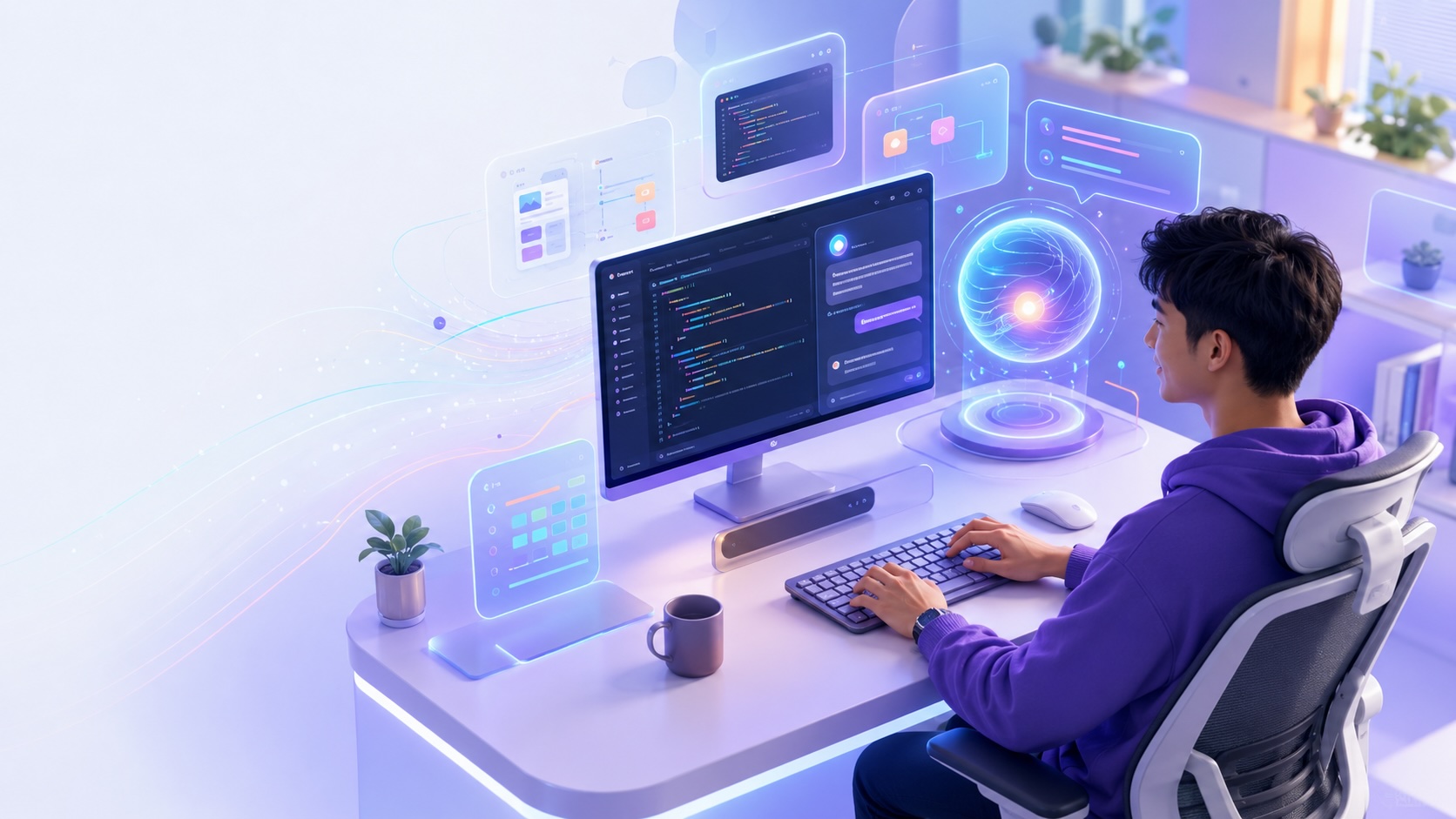
Vibe Coding: A New Way to Build with AI
Aug 21, 2026

Hengki Dwiyan Hermawan
Tech Enthusiast
Vibe Coding: A New Way to Build with AI
Vibe coding is a fresh approach to software creation where developers use AI tools as active collaborators instead of treating them as simple assistants. The idea is straightforward: instead of writing every line manually, you describe the goal, guide the direction, and let the AI help generate code, suggest improvements, and speed up repetitive work. For many builders, this feels less like traditional programming and more like shaping an idea in real time.
At its best, vibe coding makes development faster and more accessible. A person with a clear product idea can prototype quickly without spending days on boilerplate. Experienced engineers can use it to accelerate scaffolding, explore alternatives, or test interfaces before refining the logic themselves. In this sense, vibe coding is not about replacing skill. It is about reducing friction so that creativity can move faster than setup.
One reason vibe coding has become popular is that modern AI models can understand context surprisingly well. They can generate components, refactor code, explain errors, and propose next steps based on a conversation. This allows the builder to stay focused on intent rather than syntax. When used wisely, that shift can make programming feel more fluid and experimental.
However, vibe coding also comes with risks. AI-generated code is not automatically correct, secure, or maintainable. Without review, it can introduce bugs, inconsistent style, or poor architecture. That is why the human role remains essential. A strong vibe coder still understands the product, checks the output carefully, and knows when to intervene. The best results usually come from combining human judgment with AI speed.
Another important point is discipline. Because vibe coding can make it easy to move quickly, it is tempting to skip documentation, testing, or deeper understanding. That shortcut may work for a rough prototype, but it becomes expensive later if the code base grows. Good vibe coding therefore balances momentum with structure: clear prompts, small iterations, frequent checks, and a habit of verifying what the AI produces.
For startups, solo builders, and teams exploring new ideas, vibe coding can be a major advantage. It lowers the barrier to experimentation and helps turn concepts into working software faster than before. Still, the most successful teams will not treat it as magic. They will treat it as a powerful workflow — one that works best when paired with technical review, product thinking, and a willingness to learn from the output.
In the end, vibe coding represents a broader change in how software is built. The future is not necessarily human versus AI. It is human plus AI, working in a tighter loop. The people who learn how to steer that loop well will be able to build faster, explore more ideas, and adapt to change with less effort.
As the tooling improves, vibe coding will likely become a normal part of development rather than a novelty. The key is to use it intentionally: stay curious, review carefully, and let the AI amplify your thinking instead of replacing it.
Last updated on Aug 26, 2026
Back to Blog